
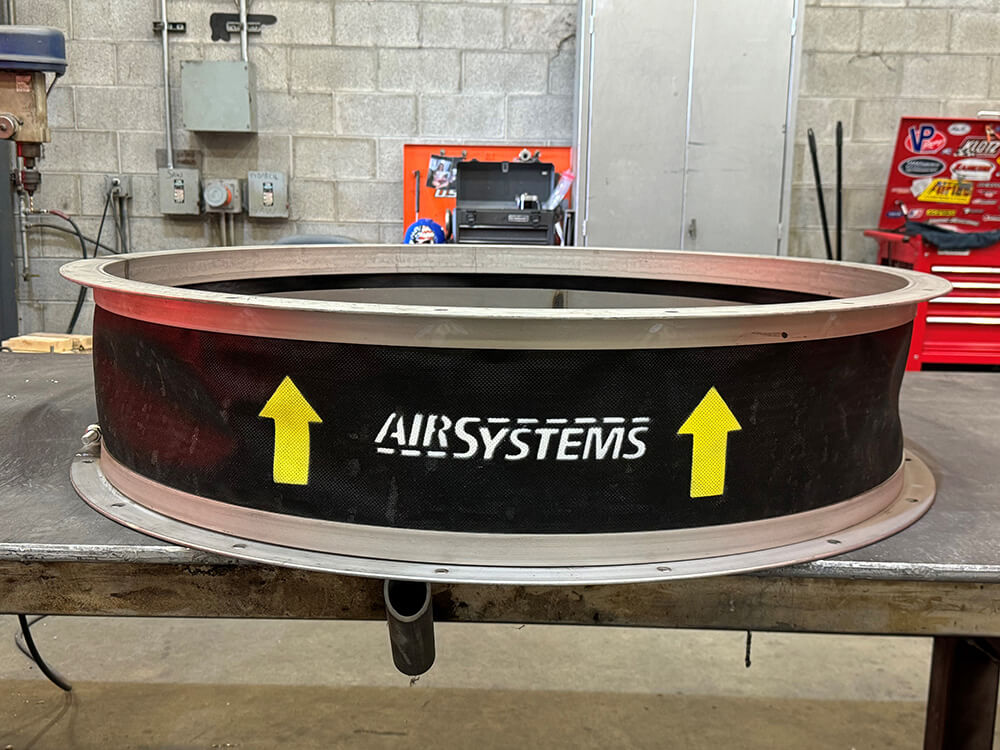
In industrial airflow systems, fan flex connectors play an essential role in absorbing vibration, misalignment, and thermal movement without disrupting airflow. But in high-heat environments, the wrong connector can do more harm than good.
Fan flex connectors, also known as expansion joints, must be engineered to withstand intense temperatures, vibration, and misalignment. Specifying the right one is essential to system reliability and safety. Whether you’re dealing with exhaust from curing ovens, flue gases, or high-temp process air, choosing the right connector materials and geometry is critical.
An Engineer’s Guide to Selecting Durable, High-Performance Fan Flex Connectors
Here’s what engineers need to know when selecting a flex connector for high-temperature industrial applications.
Step 1: Know Your Temperature Range
The first consideration in any high-heat application is the operating temperature. Materials like silicone-coated fiberglass and stainless steel are commonly used for fan flex connectors in these conditions. Always match the material to the expected continuous and peak temperatures.
While “high heat” sounds like a catch-all description, precise specifications are important for optimal performance.
Is your airflow:
- Up to 500°F? A neoprene or EPDM-coated fabric could be sufficient.
- 600°F–1000°F? You’ll need silicone or PTFE-coated fiberglass.
- 1000°F–1200°F and up? Consider high-silica or multi-layer composites with insulation barriers.
Thermal degradation is cumulative. Using a material just outside its safe range might hold up for a few months—but expect failures to start creeping in through cracking, tearing, or delamination.
Step 2: Match the Geometry to the Movement
High-performance air systems generate significant vibration and thermal expansion. Flex connectors are designed to absorb this movement, but they must be chosen based on the degree and direction of motion. Be sure to verify movement capabilities during selection.
Is the connection exposed to:
- Axial movement (in and out)?
- Lateral displacement (side-to-side misalignment)?
- Torsion or vibration (from fan startup and shutdown)?
Custom rectangular or round geometries can be designed with appropriate belt layering to absorb each type of stress. Don’t default to standard cuffs or bolt-on styles unless the movement profile supports it.
Step 3: Choose the Right Layers
There are a variety of fan flex connector styles, including single-layer, dual-layer, and reinforced options. Dual-layer designs provide additional durability in high-velocity or abrasive airflows, while reinforced designs offer extra strength in systems with high static pressure.
A multi-layer flex connector might include:
- Inner layer: Gas barrier for fumes or particulates
- Middle insulation layer: To reduce thermal transfer
- Outer abrasion shield: For mechanical protection or moisture resistance
Layering gives you performance flexibility. For example, an inner PTFE membrane resists corrosive gas, while the insulation layer protects structural integrity over time.
Step 4: Design for Maintenance and Replacement
The longevity and performance of your flex connector also depend on how it’s installed. Options include flanged, belt-type, and clamp-on styles. Each is suited to different system designs and access requirements.
In high-heat zones, access is often limited. Consider specifying:
- Bolt-on flange systems for quick changeouts
- One-piece molded connectors when leakproofing is key
- Pre-drilled mounting holes to minimize field labor
An experienced air systems specialist can help you determine the best fit for your equipment and maintenance preferences.
Step 5: Do Not Overlook Compliance and Safety
Taking the time to design a system that is safe and compliant saves you from potential headaches, downtime, and even worse situations.
High-temperature zones often coincide with:
- Emission capture (EPA scrutiny)
- VOC-heavy processes (OSHA compliance)
- Flammable or volatile conditions (NFPA concerns)
Specify materials that meet applicable safety codes and request documentation to back it up (e.g., temperature ratings, chemical resistance data, test reports). It could be the difference between a successful inspection or a failed one.
Optimize Air System Performance with the Right Flex Connector
Specifying the right flex connector is more than a box to check, it’s a critical component in protecting your system from thermal stress, vibration damage, and air leaks. For expert guidance and proven solutions, talk to the Air-Systems team.
Explore our full line of fan flex connectors or contact us now for help with your application.
