Overview Summary
- Generic, off-the-shelf dampers introduce airflow leakage and control instability in mission-critical data centers.
- Leakage and poor damper construction authority can erode containment performance and increase energy consumption.
- Actuator mismatches and inadequate torque reduce long-term sealing reliability under static pressure.
- Small airflow inefficiencies multiply at scale, shrinking redundancy margins over time.
- Custom-engineered dampers are designed around real static pressure, leakage class, and modulation demands.
- Reliable cooling performance begins with airflow control decisions made early in the design phase.
Why Generic Dampers Are a Risk to Data Center Cooling Performance
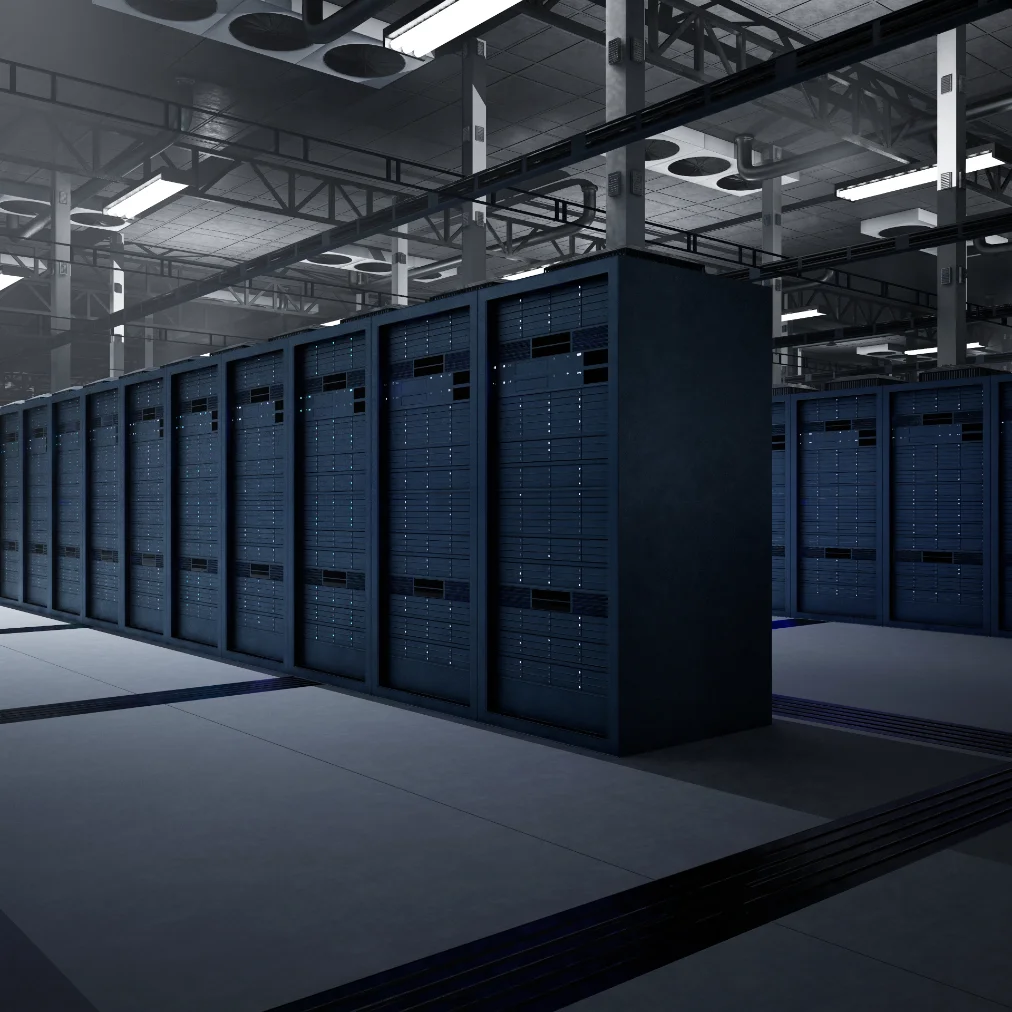 Data centers are designed around precision and redundancy. Power systems are backed up. Cooling plants are duplicated. Monitoring layers are constant and data-driven.
Yet one critical component is often considered interchangeable: the airflow control damper.
When a facility relies on generic, off-the-shelf dampers to regulate airflow, it introduces variability into an environment that demands stability. In high-density, mission-critical data centers, airflow control is not a commodity detail. It directly influences temperature stability, energy performance, and operational resilience.
Data Center Cooling Requires Precision Airflow Control
Unlike comfort cooling applications, data centers operate within:
- Tight inlet temperature bands
- High heat density per square foot
- Rapid load fluctuations
- Hot aisle and cold aisle containment strategies
- Minimal tolerance for airflow imbalance
Generic dampers are typically designed for commercial HVAC systems where small inefficiencies are manageable. Offices and retail spaces can absorb minor leakage or imperfect control response. Data centers cannot.
When airflow boundaries weaken, even slightly, containment effectiveness declines. That decline often triggers compensating adjustments in fan speed or supply air temperature, which increases energy use and system wear.
Air Leakage Undermines Containment Strategies
Hot aisle and cold aisle containment depends on predictable airflow separation. Excessive blade or frame leakage allows conditioned air to escape and hot exhaust air to recirculate into supply streams.
Generic dampers often meet baseline leakage standards suitable for general commercial applications. In a data center environment, those same leakage rates can represent measurable cooling losses, especially when multiplied across dozens or hundreds of airflow control points.
Over time, this leads to:
- Increased fan energy consumption
- Uneven supply air distribution
- Higher cooling demand
- Reduced thermal stability at the rack level
These are not immediate failures. They are gradual degradations that shrink operating margins.
Damper Authority and Control Stability Matter
Damper authority determines how effectively a damper influences airflow within a system. If authority is too low:
- Dampers operate near closed positions for extended periods
- Small blade movements cause disproportionate airflow changes
- Control loops become unstable or oscillate
Generic dampers are rarely selected based on the specific static pressure relationships within a data center. They are selected from catalog midpoints. That approach may be adequate in less critical environments, but in high-density cooling systems it can create unpredictable airflow behavior.
Precision cooling depends on dampers engineered for actual system resistance and modulation range.
Actuator Selection Impacts Long-Term Sealing Performance
In mission-critical facilities, dampers must do more than move. They must seal under pressure and reposition reliably under continuous modulation.
Generic packages often pair dampers with actuators sized only for blade movement, not for maintaining tight closure under elevated static pressure. When actuator torque is marginal:
- Sealing performance degrades over time
- Leakage rates increase gradually
- Control authority diminishes
These changes often go unnoticed until a temperature excursion exposes the weakness.
For facilities managers and engineers who are responsible for uptime, these hidden vulnerabilities can become operational risks.
Environmental Stress Conditions Expose Marginal Designs
Data centers include more than white space. Mechanical rooms, generator enclosures, battery rooms, and economizer sections introduce elevated temperatures and pressure fluctuations.
Under emergency ventilation, failover transitions, or load spikes, dampers may need to:
- Operate continuously at elevated static pressure
- Cycle rapidly between open and closed positions
- Maintain leakage class integrity under stress
Generic dampers may not be designed for these conditions. In mission-critical environments, performance under stress matters just as much as performance under normal load.
The Risk Multiplier: Scale in Hyperscale and Enterprise Facilities
One slightly underperforming damper may appear insignificant. In large-scale facilities, airflow control points can number in the dozens or hundreds.
Minor inefficiencies multiply:
- Small leakage becomes measurable cooling loss
- Incremental energy increases compound annually
- Redundancy margins narrow under peak conditions
The system may remain operational, but it becomes less stable and less efficient than intended. Over years of operation, that gap affects both operating cost and risk exposure.
Custom Dampers Are Engineered For Real Operating Conditions
Data centers vary widely in rack density, airflow strategy, economizer configuration, and geographic climate. A one-size-fits-all damper does not account for these variables.
Custom-engineered dampers can be designed around:
- Actual static pressure conditions
- Required leakage class performance
- Desired damper authority
- Modulation frequency and actuator torque requirements
- Temperature exposure and environmental stress factors
- Integration with specific control sequences
This approach aligns the component with the system, instead of forcing the system to compensate for the component.
Reliability Is Determined Before Commissioning
Cooling failures rarely occur because a major system fails without warning. More often, small inefficiencies accumulate until a stress event reveals the weakness.
Airflow control plays a central role in how cooling performance translates from design to operation. Selecting generic dampers introduces variability into systems that demand precision.
Choosing engineered airflow control reduces that variability.
Engineering Airflow Control for Mission-Critical Performance
Air Systems designs and manufactures custom industrial dampers in-house, engineered around specific airflow, temperature, and control requirements. Rather than adapting a data center’s cooling strategy to fit a catalog component, our team collaborates early with designers, contractors, and facility operators to ensure:
- Leakage performance aligns with containment strategy
- Damper authority matches actual system resistance
- Actuator torque supports long-term sealing integrity
- Fabrication and lead times align with project schedules
For facilities where uptime, efficiency, and audit readiness matter, airflow control should never be an afterthought.
If you are evaluating cooling performance in an existing data center or planning a new installation, contact Air Systems to discuss damper solutions engineered for your operating conditions.
